The Chronology of Water
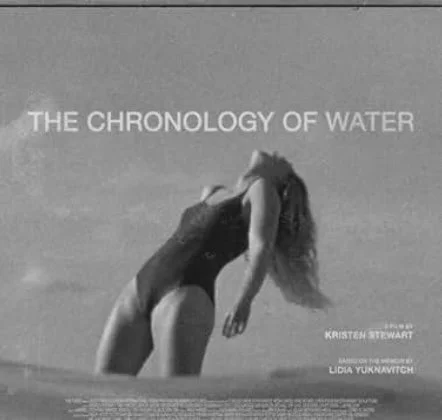
Written by Lidia Yuknavitch
This memoir carries incredible depth in both story and voice. No surprise that it was recently made into a film, only that it took so long.
It is rare to come across a memoir that not only tells the story of the traumas that happen in a life, but articulates them with the same visceral power as poetry, where the writing style itself moves through the book in a way that reflects the felt experience of the writer. Lidia Yuknavitch is not concerned with looking a certain way or standing in a flattering light. She refuses to narrow herself into the victim/heroine binary, shirking any gaze that would confine her to the pursuit of likability or the transcendence of her pain. As chaotic as the content may seem, the entire ride the reader goes on is extremely intentional; she is clearly in pursuit of truth-telling at personal cost.
She maintains dual awareness throughout the book, tracking the story and the telling, noting what will inherently get lost between the two. It's as arbitrary as the mass chaotic images we call memory, but we can put it into lines to narrativize over fear," but committing to telling it all the same. She is an incredibly guttural writer, and so her conscious choice to allude to much of the trauma while richly detailing its impact as it moves through her is a clear one. She sidesteps exploitation of suffering this way. The storytelling itself conveys far more than an accurate account of the events ever could.
This lyrical essay style is a personal favorite of mine. I find it to be the most accurate way of expressing our lived experiences as they truly feel, nonlinear, without a reliable narrator, the story shifting as we tell it, sometimes within our awareness but often not. We can be blinded by focusing too much on the content of our pain. This is even a common mistake in therapy when it is not trauma-informed: we mistakenly zoom in on the details of "what happened," missing how the storytelling itself holds the information we really need. That is where the lingering effect lies and that is where this book lives.
Often, in personally revealing conversations we ask: Does that make sense? Do other people think like this? Do other people feel this way? We are less concerned with whether others have lived our exact pains although that too is helpful (representation always matters) and more with knowing we are not alone in our lenses themselves. In my opinion, the best art is not about creating novel content, but about creating novel ways to step into one another's view and shatter the illusion of our most isolating moments.
Still, she calls back repeatedly to the unavoidable gap,
"the body doesn't lie. But when we bring language to the body, isn't it always already an act of fiction?"
and later,
"I am not alone. Whatever else there was or is, writing is with me."
However imperfect the languaging of our lives is, it is still a way of keeping ourselves company. The ending of the book is again less about content and more about the value of process,
"Make up stories until you find one you can live with.. Make up stories as if life depended on it…The things that happen to us are true. The stories we tell about it are writing. A body away from us."
Lidia's work here is honest, at times excruciatingly so. But honesty feels like what we are all craving for our individual and collective healing, especially in this moment.